

Google’s 2026 Search Updates: Is Your Website Actually Ready, or Just "Existing"?
Let’s be honest: back in the day, SEO felt like a game of "hide and seek" where Google was the seeker and we were just trying to hide enough keywords under the rug to get noticed. Fast forward to 2026, and the game has changed. Google isn't just seeking anymore; it’s thinking.
If you’re a business owner still operating on a 2022 marketing playbook, your website isn’t an asset—it’s a digital paperweight. With the full integration of Search Generative Experience (SGE) and AI Overviews, the "first page of Google" looks less like a list of blue links and more like a personalized concierge service [1, 4].
So, grab a coffee (or something stronger, we don’t judge). Here is how you survive the 2026 search apocalypse and actually turn your website into a lead-generating machine.
1. The "Zero-Click" Reality Check: Why Showing Up Isn't Enough
We used to obsess over click-through rates (CTR). We’d check our dashboards like a nervous pulse, hoping for that 3% uptick. Now, we have to deal with the "Zero-Click" search. This is where Google’s AI summarizes your entire blog post into a neat little paragraph at the top of the page, and the user never actually visits your site [3, 4].
Our Take: Don't panic. Instead of fighting the AI, you need to feed it. To rank in 2026, you need to be the source that the AI cites. This means moving away from "fluff" and toward Information Gain. If your content is just a recycled version of the top five results, Google’s AI will ignore you—because it’s already read those pages [1, 8].
You need to provide unique data, hot takes, or first-hand results that an LLM (Large Language Model) can’t just "guess." When Google's SGE serves an answer, it includes "citations"—small tiles that link back to the source. Your goal is no longer just "Ranking #1"; it’s becoming "Citation #1" [8].
2. E-E-A-T is No Longer Optional (It’s Your Insurance Policy)
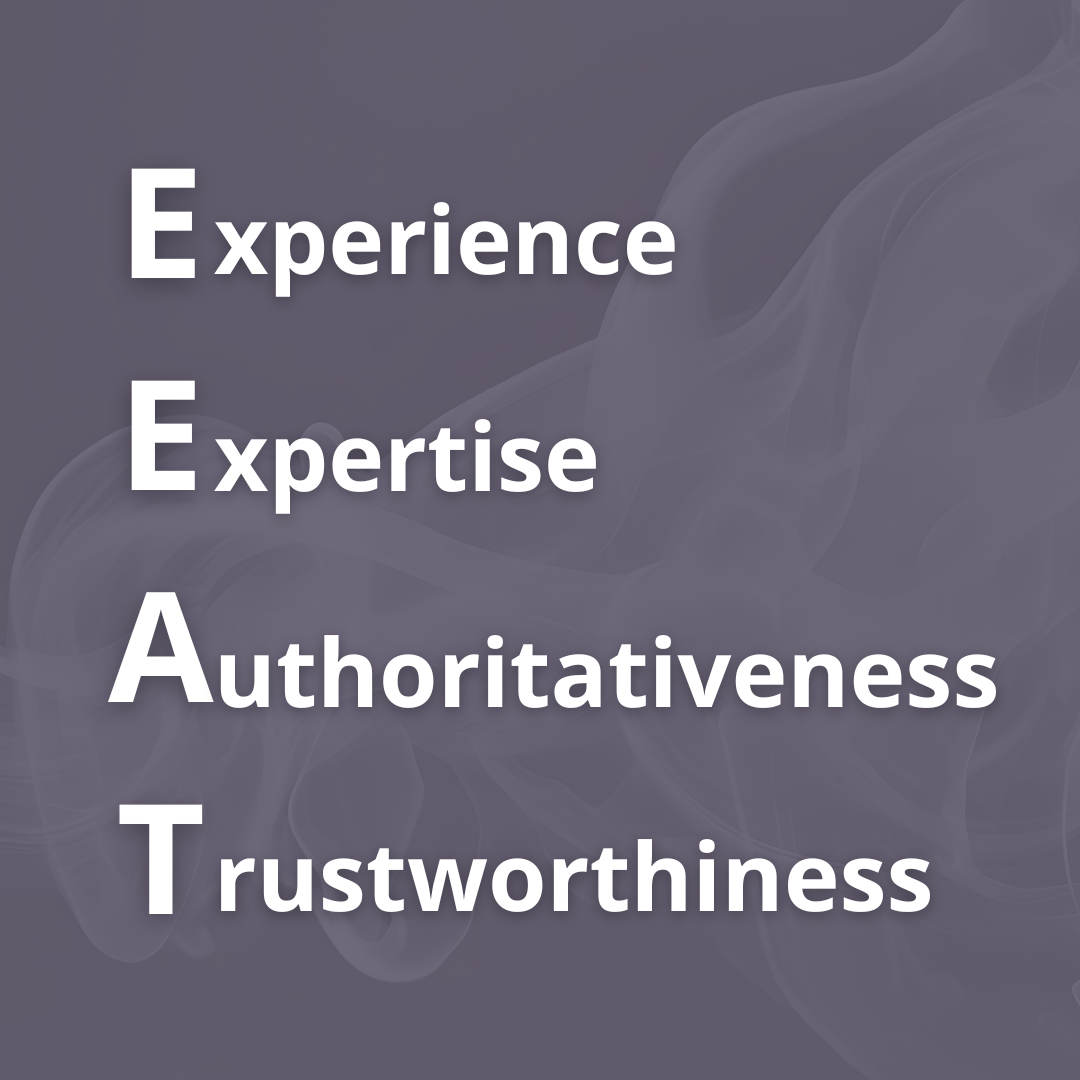
Google’s E-E-A-T (Experience, Expertise, Authoritativeness, and Trustworthiness) used to be a suggestion for health sites or financial advisors. In 2026, it’s the law for everyone [2]. With the internet flooded by mediocre AI-generated content, Google had to find a way to separate the humans from the bots.
Experience is the "New" Gold: Anyone can use AI to write a "How-To" guide on marketing. But AI hasn't sat in a boardroom, managed a $50k ad spend, or dealt with a PR crisis. Google is now scanning for "Experience" markers—real photos of your team, specific case study results, and personal anecdotes [2, 5].
The "Human" Guardrail: If your blog looks like it was written by a robot for a robot, it will be buried by a robot. We use a "Cheeky-but-Professional" tone for a reason: it’s a signal of human authorship that AI still struggles to emulate perfectly [6].
Trust as a Currency: In 2026, transparency is everything. Do you have a clear "About" page? Do your authors have verifiable LinkedIn profiles? If Google can't verify that a real person with a real brain wrote your content, it won't trust you with its users [2, 5].
3. Technical SEO: Stop Building Your Palace on Sand
I’ve seen brilliant, life-changing content die a slow death on a janky website. In 2026, Google’s crawlers are more selective than ever. They have a "crawl budget," and they aren't going to waste it on a site that takes four seconds to load a header image.
The most critical technical metric today is Interaction to Next Paint (INP) [5]. This measures how quickly your site reacts when a user clicks a button or opens a menu. In a world of instant AI answers, a "laggy" site is the digital equivalent of a shopkeeper who ignores you when you walk in.
Pro-Tip: Your site needs to be optimized for "AI Readability." This means using Schema Markup [3, 8]. Think of Schema as the "CliffsNotes" for Google’s AI. It tells the search engine exactly who you are, what you sell, and why you’re the expert in a language it speaks fluently. If you aren't using "Organization," "Service," and "FAQ" schema, you're making Google work too hard [8].
4. Intent Over Keywords: The Death of the "Single Keyword"
If your SEO person is still sending you reports based on a single keyword like "Marketing Agency," you might as well be faxing your leads. In 2026, we optimize for Topic Clusters and Conversational Intent [1].
People don't search "Marketing Agency" anymore; they ask their phone, "Who is the best marketing agency for [insert industry] that understands SGE?" [4]. Your content strategy needs to answer the "Why" and "How," not just the "What."
The Pillar & Cluster Model: You build a massive, authoritative "Pillar" page (like this one!) that covers a broad topic. Then, you surround it with "Cluster" posts that answer every specific, nagging question your customers have [6, 7].
Semantic Search: Google's AI now understands the relationship between words. If you talk about "Marketing," it expects to see "Analytics," "ROI," and "SGE" nearby [1, 3].
5. Video: The SEO Secret Weapon You’re Ignoring
By 2026, the "Perspectives" tab and YouTube integration are massive players in search results [4, 5]. Google knows that some people would rather watch a 60-second clip than read a 1,500-word blog.
Dwell Time: Embedding a video at the top of your blog keeps users on the page longer. This sends a signal to Google that your content is high-quality [5].
Visual Search: With tools like "Circle to Search," people are searching for what they see. Ensuring your images have high-quality alt-text and metadata is no longer a "nice-to-have"—it's a requirement for being found in visual search engines [1, 8].
6. Local SEO and the "Reasoned Recommendation"
For local business owners, the "Map Pack" is still vital, but it’s evolving. AI now provides "Reasoned Recommendations." If a user asks, "Which marketing agency in Edmonton should I book a consultation with?", Google won't just show a list. It will provide a summary of your reputation [3, 4].
To win this, your local SEO needs to be bulletproof. This means:
Review Velocity: Getting 50 reviews in 2021 and stopping isn't enough. You need a steady stream of recent, detailed reviews [5, 7].
Local Entities: Link your site to local landmarks, events, and other local businesses. This helps Google's AI understand your physical footprint in the real world [7].
The "Too Long; Didn't Read" (TL;DR) for Business Owners
Look, the 2026 updates aren't here to ruin your business—they’re here to reward the best ones. If you stop trying to "hack" the system and start trying to be the most helpful, transparent, and technically fast resource in your niche, you will win.
Stop being boring. AI is boring. Be a human with a personality and an opinion [2, 6].
Be the source. Provide original data, case studies, or "Experience" markers that AI wants to cite [3, 8].
Fix your tech. If your site is slow or lacks Schema markup, you’re invisible to the crawlers [5, 8].
Cluster your content. Cover a topic so deeply that Google has no choice but to call you the authority [6, 7].
Source
Preparing for 2026: SEO Predictions Based on 2025 Search Trends - Medium
Creating Helpful, Reliable, People-First Content - Google Search Central
AI Search, Google SGE & SEO in 2026 for Small Businesses - Knapsack Creative
The Future of SEO: How AI Is Changing Content Strategy in 2026 - M&R Marketing
SEO in 2026 Is Different — How to Rank a New Website - The Diamond Group
How to Optimize Content for AI Search Engines - Search Engine Land
