How Midstream Engineering Firms in North America Are Quietly Generating More Leads in 2026
(A Story About Pipelines, Pressure, and Why “Waiting for Referrals” Finally Broke)
6:17 a.m. in a Control Room Somewhere in Texas
At 6:17 a.m., the Vice President of Operations at a midstream engineering firm—let’s call them Ironclad Midstream Engineering—was already awake, coffee cooling beside a keyboard that hadn’t stopped clicking since dawn.
Ironclad was good… Dangerously good.
They designed and maintained pipelines across multiple states. They solved integrity issues before regulators escalated them. They prevented incidents that never made headlines—the quiet wins that define competent engineering.
Yet growth had stalled.
New work still came in, but mostly through:
Long-standing relationships
Referrals that “might close”
The occasional RFP invite
The firm wasn’t shrinking—but it wasn’t scaling either.
According to McKinsey & Company, B2B buyers in capital-intensive industries now complete over 65% of their decision-making journey digitally before speaking with a vendor. Ironclad’s leadership realized something uncomfortable:
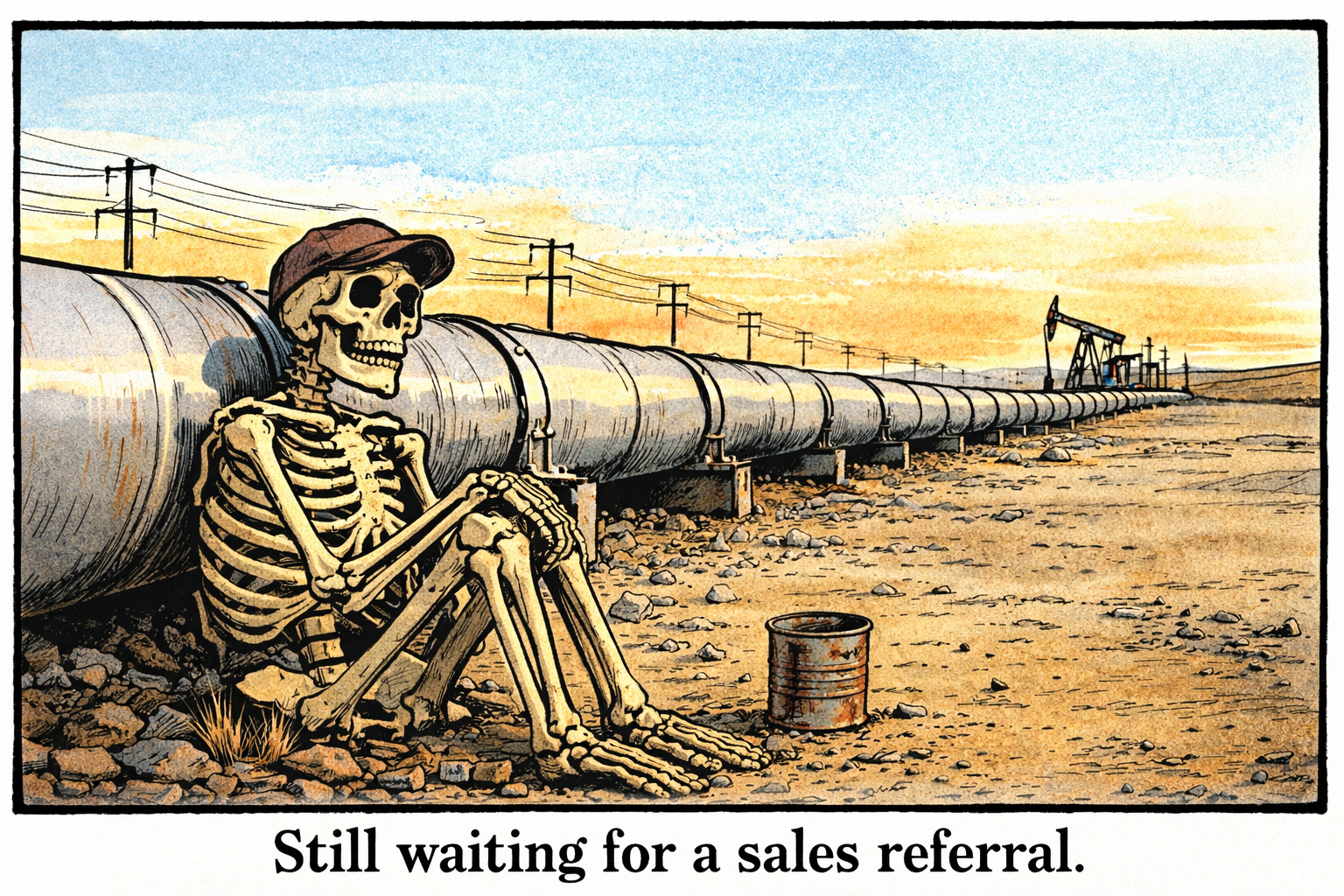
Their engineering had evolved.Their client acquisition model had not.
So they stopped asking “How do we sell more?” and started asking:
“How do operators actually choose an engineering firm in 2026?”
Act I: When Google Quietly Replaced the Golf Course
The turning point came after Ironclad lost a bid to a smaller competitor. The feedback was blunt:
“They explained pipeline integrity and compliance risks better before we even met.”
The competitor didn’t have better engineers. They had better visibility.
Research from Google confirms that technical B2B buyers increasingly rely on search and AI-generated summaries to evaluate vendors, favoring firms that demonstrate topical authority and clarity, not just reputation.
Ironclad realized their first failure wasn’t engineering—it was discoverability.
Method #1: Authority Content Built for Midstream Operators
Ironclad stopped publishing generic marketing content and started producing technical, SEO-optimized authority material aimed squarely at midstream oil and gas decision-makers.
They wrote about:
Pipeline integrity engineering
Regulatory compliance exposure
Asset lifecycle risk
Failure prevention and remediation planning
Each piece was designed to rank for high-intent searches like:
midstream engineering firms North America
pipeline engineering company oil and gas
regulatory compliance engineering oil and gas
This approach aligns with findings from HubSpot, which reports that B2B firms publishing authoritative educational content generate 67% more leads than those that rely primarily on outbound tactics.
Within a year:
Organic traffic more than tripled
Prospects arrived already educated
Sales conversations shifted from “who are you?” to “how soon can you help?”
Ironclad hadn’t hired marketers. They had turned engineers into teachers at scale.
Act II: The Website That Finally Did Its Job
Next came the website—and the realization that it was quietly undermining them.
Like many oil and gas engineering sites, Ironclad’s homepage was a digital résumé:
Decades of experience
Broad service lists
Carefully vague messaging
According to Gartner, B2B buyers overwhelmingly prefer vendors who simplify complex decisions and reduce perceived risk, rather than those who overwhelm them with credentials.
So Ironclad rebuilt their website around operator problems, not internal structure.
They reframed messaging around:
Pipeline integrity risk
Compliance exposure
Downtime and environmental cost
Safety accountability
They added:
Industry-specific landing pages for midstream oil and gas
Downloadable technical resources
Case studies framed around risk avoided, not services performed
Research from McKinsey & Company shows that reducing uncertainty is one of the strongest drivers of vendor selection in infrastructure and energy procurement.
The results were immediate:
Conversion rates increased by more than 250%
Fewer unqualified inquiries
Higher-quality discussions with operations and compliance leaders
The website stopped being a brochure and became a pre-meeting decision aid.
Act III: Being Present When Pressure Is Highest
Ironclad’s final realization was about timing.
Midstream operators don’t casually browse engineering firms. They search when:
A compliance deadline approaches
An integrity issue is flagged
An expansion or retrofit is approved
That’s where paid search and retargeting entered the system.
Ironclad launched highly targeted campaigns for searches like:
pipeline engineering firm for oil and gas operators
midstream EPC engineering North America
They paired this with retargeting—quietly staying visible to decision-makers who had already visited their site.
According to HubSpot, retargeted B2B visitors are 70% more likely to convert than first-time visitors, particularly in industries with long sales cycles.
The impact wasn’t flashy—but it was effective:
Lower cost per qualified lead
Shorter sales cycles
Stronger brand recall during procurement discussions
Ironclad didn’t chase demand. They positioned themselves precisely where demand emerged.
Why the System Works (And Why Pieces Alone Don’t)
Ironclad’s leadership eventually described their new lead generation model the way engineers understand best:
Authority content creates pressure
A conversion-focused website controls flow
Paid acquisition accelerates delivery
Remove one element, and the system leaks. Integrate all three, and growth becomes predictable.
This aligns with broader B2B research from McKinsey & Company, which shows high-performing firms build repeatable acquisition systems, not reliance on individual relationships.
The Ending (Which Isn’t an Ending at All)
By 2026, Ironclad Midstream Engineering hadn’t changed how they designed pipelines.
They changed how the market understood them.
Leads arrived earlier in the buying cycle. Conversations became shorter and more technical. Procurement teams already trusted them before the first call.
Referrals still happened—but no longer as a survival mechanism.
As Ironclad’s VP put it:
“We didn’t become better engineers. We became easier to recognize as the right ones.”
Final Thought for Midstream Engineering Leaders
In North America’s midstream oil and gas sector, the firms winning the most work aren’t louder, trendier, or more aggressive.
They are:
Easier to find
Easier to understand
Easier to trust
In 2026, lead generation isn’t about selling harder.
It’s about removing friction from how operators choose.