

The "In-House" Trap: Why Engineering Precision Needs Marketing Velocity to Drive Profitability
In the high-stakes world of Oil & Gas engineering, there is a sacred, deeply ingrained respect for the "In-House" expert. You wouldn’t outsource your lead structural integrity calculations to a hobbyist, and you certainly wouldn't want your safety coordination handled by someone who hasn't spent time on a lease. In an industry where a decimal point error can lead to a multi-million dollar "event," having total control over your core competency isn't just a preference—it’s a survival mechanism.
However, a curious thing happens when an engineering firm decides it’s time to scale. Whether they are looking to move from "the reliable local shop" to a dominant regional player, or they are trying to attract Tier-1 producers, they often apply that same "keep it in-house" logic to their marketing.
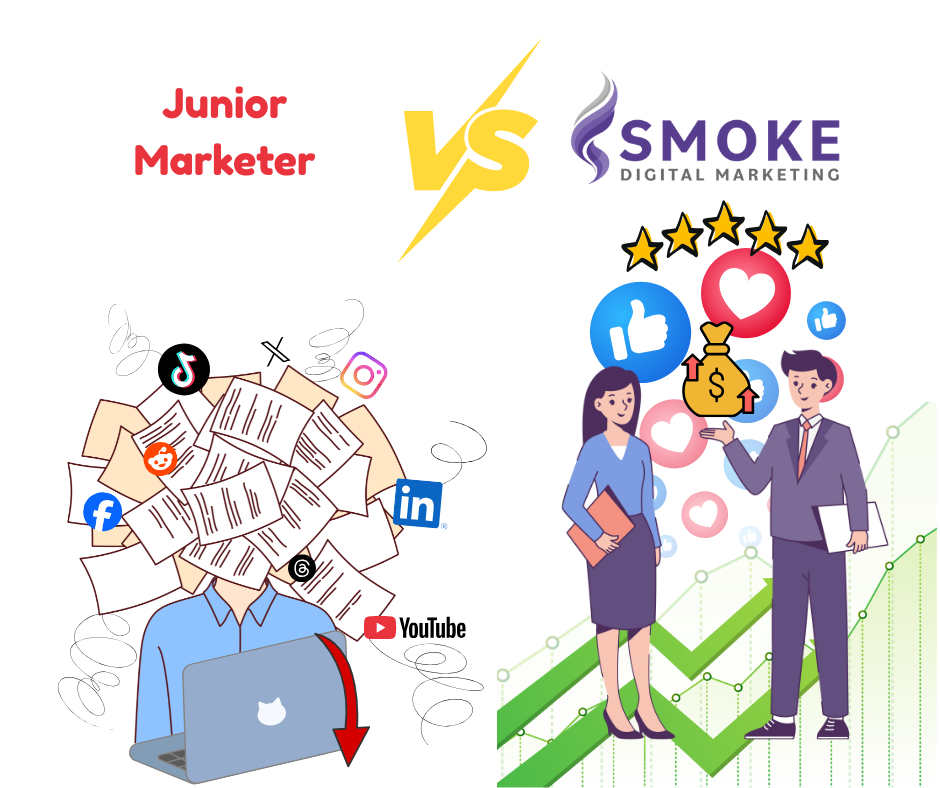
The typical playbook looks like this: the company hires a junior marketing coordinator—usually a bright recent grad who is "good with social media"—gives them a laptop, and says, "Post some stuff on LinkedIn, update the brochures, and make us look big."
Six months later, the company has a few nice pictures of the annual staff BBQ and a corporate holiday card, but the pipeline of high-value, technical leads is as dry as an abandoned wellhead.
The missing link? The understanding that marketing for engineers is an engineering problem in itself. It requires specialized tools, diverse skill sets, and a level of strategic horsepower that a single in-house hire simply cannot provide. To achieve true brand authority and, more importantly, sustainable profitability, engineering firms must look toward the agency model.
1. The Skill Set Deficit: You Don't Need a "Generalist," You Need an Ecosystem
The most significant pitfall of the in-house marketing model is the "Jack of All Trades, Master of None" syndrome. When you hire one person, you get one person’s brain. They might be excellent at graphic design, but can they also manage a complex Google Ads campaign that targets specific procurement managers in the Permian Basin? Can they write a 2,000-word technical white paper on SAGD thermal efficiency that is simultaneously accurate enough for a Senior Engineer and persuasive enough for a CFO?
In reality, modern marketing is a multi-disciplinary field. To move the needle on profitability, you need an ecosystem of specialists:
The Strategist: To align your marketing spend with your five-year growth targets, ensuring you aren't just "spending money" but investing in market share.
The SEO Scientist: To navigate the invisible architecture of search engines so that when a VP of Operations Googles "reducing unplanned downtime in cold-climate pipelines," your firm is the first thing they see.
The Technical Copywriter: Someone who speaks fluent "Engineer" and "Business" simultaneously—cutting through the fluff to deliver high-value insights.
The Data Analyst: To track the "digital breadcrumbs" of your leads, proving exactly which campaigns are driving revenue and which are just noise.
An agency like Smoke Digital Marketing provides this entire "Department of Experts" for the cost of a single mid-level salary. You aren't just hiring a person; you are hiring a collective intelligence that is constantly evolving with the market.
2. The Profitability of the "Outside-In" Perspective
There is a psychological phenomenon in engineering firms called "Technical Near-Sightedness." Because your team is so brilliant at how a specific tool or process works, your marketing often becomes a list of technical specifications. You talk about tolerances, materials, and flow rates.
But here is the hard truth: Your clients don’t buy flow rates. They buy the absence of failure. They buy the mitigation of risk. They buy the protection of their bonus.
A marketing agency brings an objective, "outside-in" perspective. We aren't bogged down in the day-to-day internal politics or the minutiae of the assembly line. We see your company as the market sees it. We identify the unique value propositions that your own team might take for granted.
By shifting the narrative from "What we do" to "Why it makes the client more profitable," an agency elevates your brand from a commodity service to a strategic partner. This shift is where the real money is made. It allows you to move away from race-to-the-bottom bidding wars and toward premium, value-based pricing.
3. Avoiding the "Internal Friction" Sinkhole
In many engineering firms, the in-house marketing person eventually becomes the "everything" person. Because they are the only ones who know how to use Canva or edit a PDF, they spend 70% of their time on low-value tasks: fixing the formatting on a sales deck, organizing the company golf tournament, or tweaking the font on an internal memo.
This is a "hidden cost" that kills profitability. While your marketing hire is busy picking out the catering for a lunch-and-learn, the market is moving past you.
When you partner with an agency, you aren't paying for "hours worked"—you are paying for outcomes. Our only metric for success is your growth. There is no internal friction; there are no "other duties as assigned." Every dollar you spend with an agency is laser-focused on market-facing activities that generate leads and build brand equity.
4. Speed to Market: The Competitive Edge
In the Oil & Gas industry, the window of opportunity can be incredibly small. A new environmental regulation is passed, a new pipeline project is greenlit, or a competitor's major failure creates a sudden vacuum in the market. You need to react instantly.
Building an in-house team capable of pivoting that quickly takes years. You have to recruit, onboard, train, and hope they don't leave for a competitor the moment they become useful.
An agency is a "plug-and-play" growth engine. We already have the infrastructure. We have the technical writers on standby, the ad accounts ready to scale, and the historical data to know what works in the patch. We can launch a lead-generation campaign in weeks that would take an in-house team months to coordinate. In a high-margin industry, that time-saving alone can represent hundreds of thousands of dollars in "first-mover" advantage.
5. Brand Awareness vs. Brand Authority
There is a common misconception that marketing is just about "getting your name out there" (Brand Awareness). If you have enough money, anyone can get their name out there. But in engineering, you don't just want to be known; you want to be trusted.
Brand Authority is the ultimate goal. It’s the difference between being a vendor and being an advisor.
An agency builds this authority through "Thought Leadership." We take your engineers’ raw data and expertise and package it into stories that resonate. We turn your company into a source of industry knowledge. When the market views you as the authority, the sales cycle shrinks. Prospects don't need to be "convinced" to hire you; they’ve already been reading your insights for months. They come to the table pre-sold.
The Executive Conclusion: Engineering Your Growth
CEO-to-CEO, let’s be blunt: You wouldn’t trust a marketing agency to design a pressure vessel. So why trust an engineer—or a lone, overwhelmed marketing junior—to design your company’s financial future?
Engineering is the art of solving problems with precision and data. Marketing is the art of ensuring the right people—those with the budgets and the problems—know you are the only logical choice to solve them.
By outsourcing your marketing to a specialized agency like Smoke Digital Marketing, you are making a tactical decision to protect your engineers' time. You allow them to stay in the zone of their genius, while we stay in ours. The result isn't just "better marketing." It’s a more streamlined, more authoritative, and significantly more profitable organization.
The oil patch is changing. The way engineers buy services is changing. The "Dave" from our story earlier is looking for a signal in the noise. Don't let your company be part of that noise. Let us help you be the signal.
Is your current marketing strategy a "ghost in the machine"?
Let’s stop the "Whack-A-Mole" approach to lead generation. At Smoke Digital Marketing, we don't do fluff and we don't do generic. We build high-performance marketing engines for high-performance engineering firms.
Ready to see the data? Let’s look at your competitors' blind spots and find exactly where your next seven-figure contract is hiding.
