Paid Social Marketing vs. Organic Social Marketing: Pros, Cons, and Which One Grows Your Business Faster
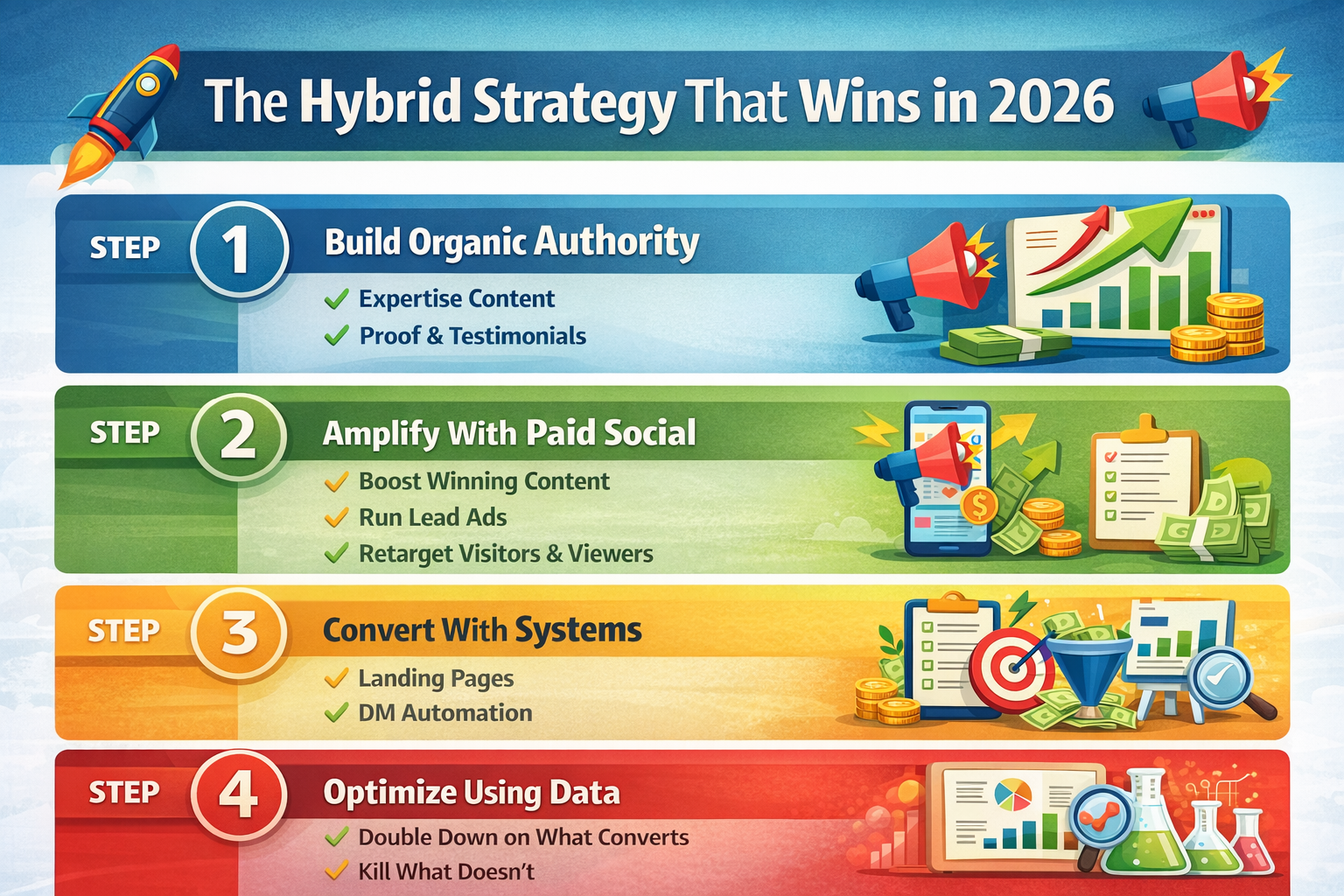
The hybrid strategy to succeed in 2026
Paid social marketing and organic social marketing serve different purposes, timelines, and growth goals.
Paid social delivers immediate visibility and predictable leads, while organic social builds long-term trust, authority, and brand equity.
In 2026, the fastest-growing brands don’t choose between them. They integrate both into a single growth system.
This article breaks down the pros and cons of paid social vs organic social marketing, explains when each works best, and shows how modern businesses use both to drive scalable growth.
What Is Paid Social Marketing?
Paid social marketing is the use of paid advertisements on social platforms to reach targeted audiences, generate leads, and drive conversions.
Examples include:
Facebook and Instagram ads
LinkedIn sponsored posts
TikTok ads
YouTube ads
retargeting campaigns
Paid social allows businesses to control:
who sees their content
when it’s shown
how often it appears
what action users take
What Is Organic Social Marketing?
Organic social marketing is the use of unpaid content to build an audience, trust, and engagement on social platforms.
Examples include:
regular feed posts
reels and short-form video
stories
carousels
community engagement
Organic social focuses on:
relationship building
authority
social proof
brand discovery
Key Difference Between Paid and Organic Social Media
The main difference between paid and organic social marketing is speed vs. sustainability.
Paid social = fast results, high control, ongoing cost
Organic social = slow build, long-term trust, compounding value
Both matter—but for different reasons.
Pros of Paid Social Marketing
1) Immediate Visibility and Results
Paid social delivers instant exposure.
A business can launch an ad today and generate traffic or leads the same day.
This is critical for:
new businesses
product launches
time-sensitive promotions
fast testing of offers
Unlike SEO or organic social, there’s no waiting period for distribution.
2) Precision Targeting
Paid social allows hyper-specific audience targeting.
You can target users by:
age
gender
location
job title
income range
interests
behaviors
website activity
email lists
This eliminates much of the wasted reach common in traditional advertising.
3) Predictable Lead Flow
Paid social creates controllable, scalable lead generation.
When a campaign works:
budgets can be increased
winning creatives can be duplicated
audiences can be expanded
This makes paid social ideal for:
service businesses
agencies
SaaS
e-commerce
local services
4) Rapid Testing and Optimization
Paid social provides real-time performance data.
Marketers can test:
hooks
headlines
creatives
offers
landing pages
Within days, not months.
This short feedback loop accelerates growth.
5) Retargeting Power
Paid social excels at retargeting warm audiences.
You can show ads to:
website visitors
video viewers
email subscribers
past customers
This dramatically increases conversion rates.
Cons of Paid Social Marketing
1) Ongoing Cost
Paid social stops working the moment spending stops.
Unlike organic content, ads don’t compound.
This creates:
dependency on ad budgets
pressure to maintain ROI
vulnerability to rising costs
2) Rising Competition and Costs
Ad platforms become more competitive every year.
As more businesses advertise:
cost per click rises
cost per lead increases
performance becomes less stable
This requires constant optimization.
3) Ad Fatigue
Audiences get tired of seeing the same ads.
This leads to:
declining click-through rates
higher costs
reduced conversion rates
Creative refresh is mandatory.
4) Trust Gap
Cold paid traffic often lacks trust.
Users may:
ignore ads
distrust claims
need multiple touchpoints
Paid social works best when paired with proof and authority.
Pros of Organic Social Marketing
1) Builds Trust and Authority
Organic social builds long-term credibility.
It shows:
expertise
consistency
transparency
personality
This creates emotional connection.
People buy faster from brands they recognize and trust.
2) Compounding Returns Over Time
Organic content compounds.
A single strong post can:
attract followers
generate leads
build authority
support sales
for months or years.
Unlike ads, organic content doesn’t disappear.
3) Lower Long-Term Cost
Organic social has no media cost.
The only investment is:
content creation
time
strategy
Over time, cost per lead often drops significantly.
4) Improves Conversion Rates Across Channels
Organic social increases conversion rates everywhere.
When prospects:
see consistent content
recognize your brand
trust your expertise
They convert more easily from:
ads
SEO
email
referrals
5) Strengthens Brand Positioning
Organic social defines what your brand is known for.
It shapes:
brand voice
niche authority
emotional identity
This differentiation is difficult for competitors to copy.
Cons of Organic Social Marketing
1) Slow Growth Curve
Organic social takes time.
It often requires:
months of posting
testing formats
building audience trust
Results are not immediate.
2) Algorithm Dependence
Organic reach is controlled by platform algorithms.
Posts may:
get limited distribution
fluctuate unpredictably
lose visibility overnight
Consistency is required.
3) Harder to Scale Quickly
Organic growth is difficult to accelerate.
Unlike ads:
you can’t buy reach
growth is incremental
This limits speed.
4) Content Production Demands
Organic social requires constant content creation.
This includes:
ideas
filming
editing
writing
posting
engagement
Many businesses struggle to maintain consistency.
Paid vs Organic Social: Head-to-Head Comparison
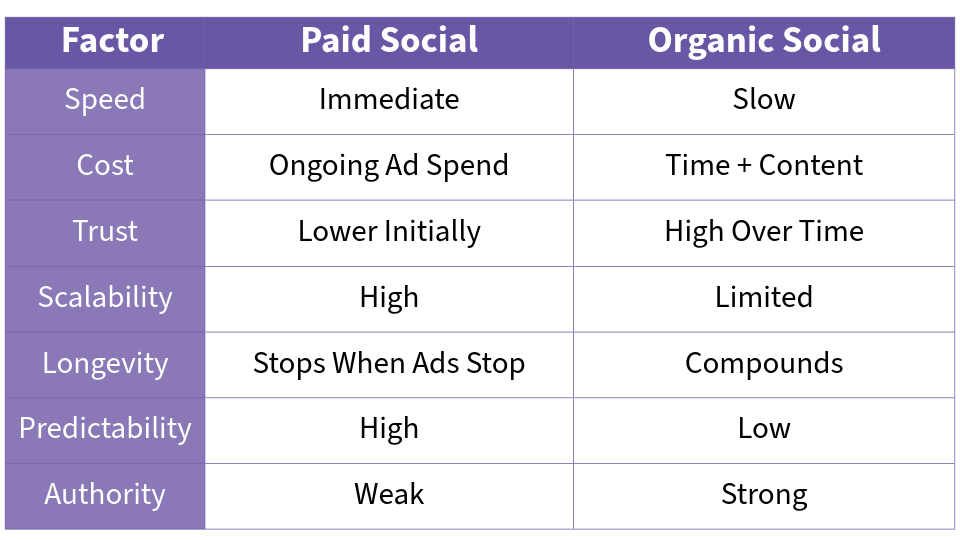
Paid vs Organic Social Marketing
Which Is Better: Paid or Organic Social?
Neither is better alone. The best strategy uses both.
Paid social without organic:
lacks trust
has lower conversion rates
becomes expensive
Organic social without paid:
grows too slowly
limits lead volume
reduces scale potential
The Hybrid Strategy That Wins in 2026
The most effective approach combines organic trust-building with paid distribution.
Step 1: Build Organic Authority
expertise content
proof and testimonials
FAQs and objections
behind-the-scenes
Step 2: Amplify With Paid Social
boost winning content
run lead ads
retarget visitors and viewers
Step 3: Convert With Systems
landing pages
DM automation
booking funnels
Step 4: Optimize Using Data
double down on what converts
kill what doesn’t
refresh creatives
When Paid Social Is the Right Choice
Paid social is best when:
you need leads now
launching something new
testing offers quickly
scaling a proven funnel
When Organic Social Is the Right Choice
Organic social is best when:
building a brand
establishing authority
improving trust
supporting long-term growth
FAQ
Is paid social better than organic social?
Paid social is better for speed and predictable leads. Organic social is better for trust and long-term brand equity. The best results come from using both together.
Can organic social replace paid social?
No. Organic social rarely generates scalable, predictable lead volume alone. Paid social is needed for controlled growth.
Which is cheaper: paid or organic social?
Organic social is cheaper long-term. Paid social costs money continuously but produces faster results.
Conclusion: The Real Answer Isn’t Paid vs Organic — It’s Both
Paid social delivers speed. Organic social builds trust.
In 2026:
paid social fuels growth
organic social sustains growth
Businesses that rely on only one limit their potential.
The highest-performing brands and marketing agencies integrate both into a single growth engine.
That’s the strategy that wins now—and into the future.